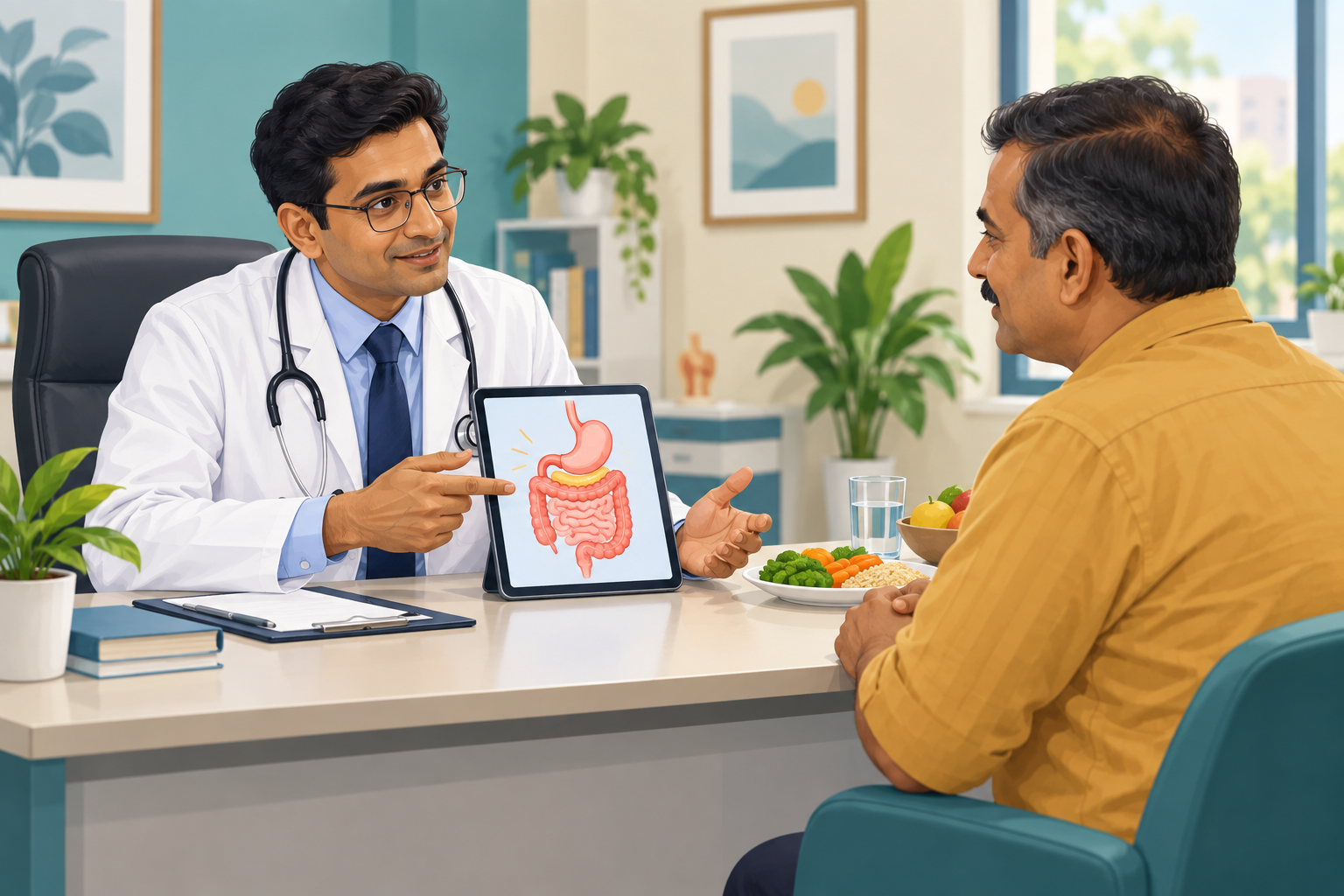
Why stool consistency matters more than anything else
Hard stool and straining raise pressure in the anal cushions and can tear the anal lining. Almost every recurrence of piles and fissure we see traces back to this one factor.
Once stool is soft and passes easily, symptoms often reduce noticeably even before any procedure is considered.
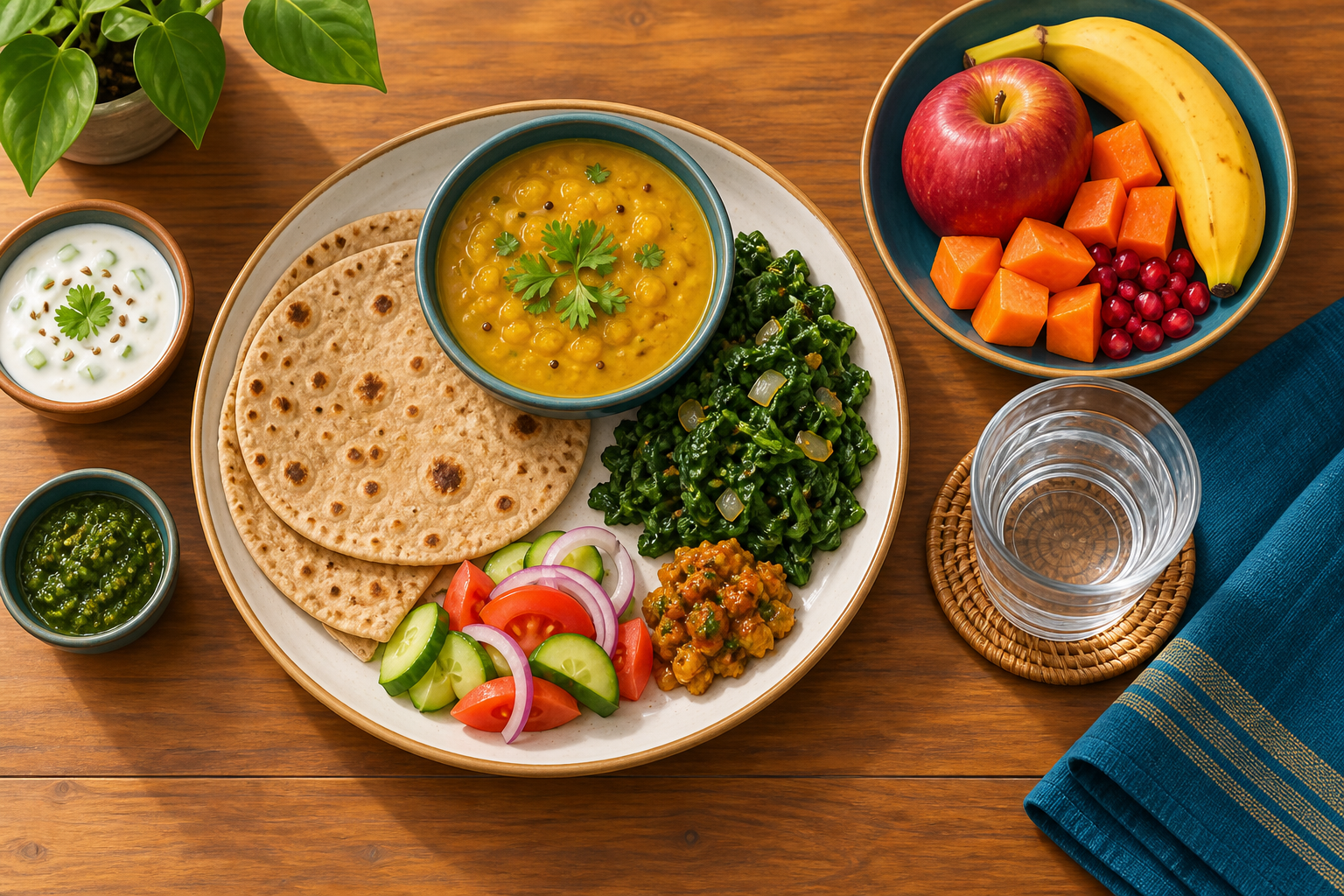
Fibre from foods that are actually available here
Fibre does not require special products. Everyday options work well when eaten consistently.
- Whole wheat roti and unpolished or brown rice instead of only refined flour
- Dal, chana, rajma, sprouts and other pulses
- Green vegetables, bhindi, lauki, palak and carrot
- Papaya, guava, banana, orange and other seasonal fruit with the skin where edible
- Soaked and cooked flaxseed or isabgol, if the doctor has advised it
Water, movement and routine
Fibre without water can make constipation worse. Drink water steadily through the day rather than in large amounts at once, and increase it in summer.
Thirty minutes of walking most days improves bowel movement. For people who sit for long hours at a desk or while driving, standing up briefly every hour matters.
Try to use the toilet at roughly the same time each day, and go when the urge comes rather than postponing it.
Habits worth stopping
A few common habits actively work against healing.
- Sitting on the toilet for long periods, especially with a phone
- Straining or pushing to finish quickly
- Regular use of strong laxatives without advice
- Very spicy food and alcohol during an acute episode, if they worsen your symptoms
- Ignoring the urge to pass stool because of pain
Where lifestyle change is not enough
Diet and habit correction help most patients, but they cannot close a fistula tract, heal an established chronic fissure on their own, or reduce advanced prolapsed piles. If symptoms persist despite these measures, get examined rather than continuing indefinitely.
Frequently asked questions
This article is general health information and does not replace a clinical examination. Please consult a doctor about your own symptoms.