

Skip to content
Om Sai Piles CareRanchi · Jamshedpur

Chronic Non-Healing Wounds

Chronic Non-Healing Wounds

A wound that has not healed over several weeks despite dressings is called a chronic non-healing wound, and it usually means something is interfering with healing — most often diabetes, poor blood supply, infection or pressure. Treatment at Om Sai Piles Care starts by identifying that reason, because dressings alone rarely resolve such a wound.
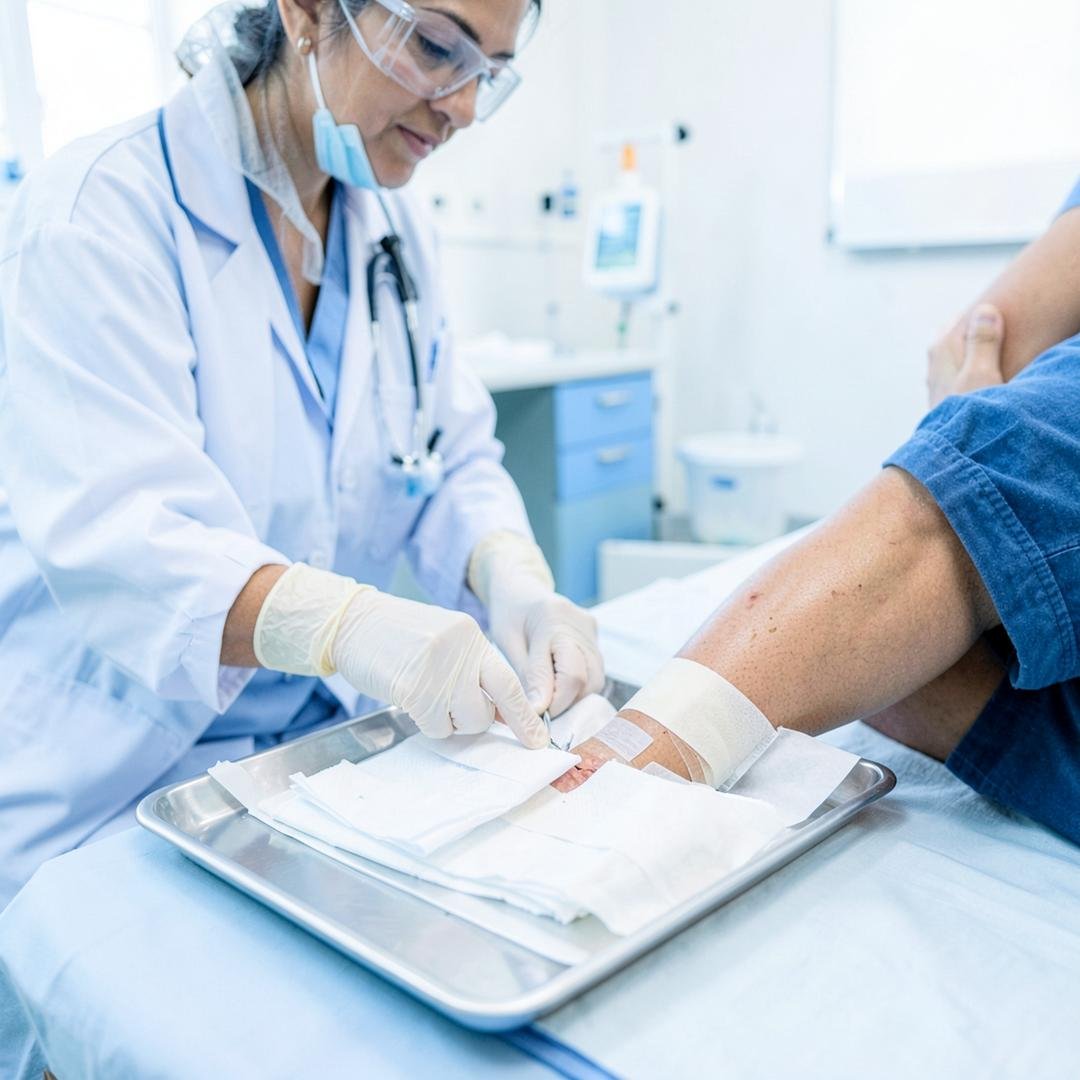
Clinician providing professional dressing care for a chronic wound

Overview

Wounds normally heal in a predictable sequence. When healing stalls, the wound sits in a prolonged inflammatory state, and repeated dressing changes without addressing the underlying cause make little difference.

In this region, uncontrolled diabetes is one of the most frequent contributors, along with reduced blood supply, persistent local infection and continuous pressure on the same area. Nutritional deficiency and smoking also slow healing considerably.

The assessment therefore looks beyond the wound surface: the patient's sugar control, circulation, wound depth and any dead tissue all influence what treatment is appropriate.

Common symptoms

  • A wound that has shown little or no improvement over several weeks
  • Persistent discharge, sometimes with an odour
  • Surrounding skin that is red, dark, thickened or fragile
  • Pain that is either increasing or, in some patients, absent because of nerve involvement
  • Repeated breakdown of a wound that appeared to have healed
  • Swelling of the affected limb or area

Common causes

  • Diabetes with poor blood-sugar control
  • Reduced arterial blood supply to the area
  • Venous insufficiency, particularly in leg wounds
  • Persistent local infection or dead tissue in the wound
  • Continuous pressure on one area in patients with limited mobility
  • Smoking, poor nutrition and low protein intake

How it is assessed

  • Assessment of the wound's size, depth, base and edges
  • Review of blood-sugar control and other medical conditions
  • Evaluation of circulation to the affected area
  • Assessment for infection, including whether deeper tissue is involved
  • Blood tests or imaging where they are needed to guide treatment

Treatment approach

  • Correction of the underlying factor wherever possible, including referral for better diabetes control
  • Removal of dead tissue so that healthy tissue can heal
  • Appropriate dressing selection matched to the wound's stage, changed as the wound progresses
  • Infection control with treatment guided by clinical assessment rather than routine antibiotics
  • Offloading, pressure relief and nutritional guidance as part of the plan
  • Regular review to confirm the wound is genuinely improving

When you should consult a doctor

  • A wound that has not improved in two to four weeks
  • Any wound in a patient with diabetes, however small it appears
  • Increasing pain, spreading redness, foul discharge or fever
  • Blackened tissue at or around the wound
  • A wound that heals and repeatedly breaks down

FAQ

Questions about chronic non-healing wounds

Related

Related treatments

Doctor explaining pilonidal sinus care with an anatomical model

Pilonidal Sinus

Treatment for pilonidal sinus and recurrent abscesses at the base of the spine.

Learn more

Doctor reviewing a diagnostic scan during an anal fistula assessment

Anal Fistula

Evaluation and treatment of anal fistula, including recurrent and previously operated fistulas.

Learn more

Clinician preparing modern laser treatment equipment

Laser-Assisted Anorectal Treatment

Laser-assisted options for selected patients with piles, fissure, fistula or pilonidal sinus.

Learn more

Read more

Related articles

Illustration of an Indian woman arriving for a clinic appointment
When to See a DoctorEnglish

When to See a Doctor for Anorectal Symptoms

A practical guide to the symptoms that should not be watched and waited on, and what to bring to your consultation.

Read article

Illustration of an Indian doctor leading a patient education discussion
Common MisconceptionsEnglish

Six Common Misconceptions About Piles and Anorectal Treatment

Painless guaranteed cures, permanent creams, and the belief that surgery is always required — the ideas that most often delay proper treatment.

Read article

Illustration of an Indian meal with dal, roti, vegetables, fruit and water
Diet & LifestyleEnglish

Diet and Lifestyle That Support Anorectal Health

Most piles and fissure symptoms are driven by constipation and straining. These are the practical changes that make a difference.

Read article

Request an appointment

Fill in your details and we will confirm a suitable time. You can also call us directly during consultation hours.

Main clinic timing
9:00 AM – 9:00 PM

Submitting opens WhatsApp with your details filled in, so you can review the message before sending it. Please do not share sensitive medical reports through this form.

Book a consultation at Om Sai Piles Care

Talk to our team about piles, fissure, fistula, pilonidal sinus or a wound that is not healing. Main clinic consultation hours are 9:00 AM to 9:00 PM.

CallWhatsAppAppointment